Thieboudienne
Senegal · Sub-Saharan Africa
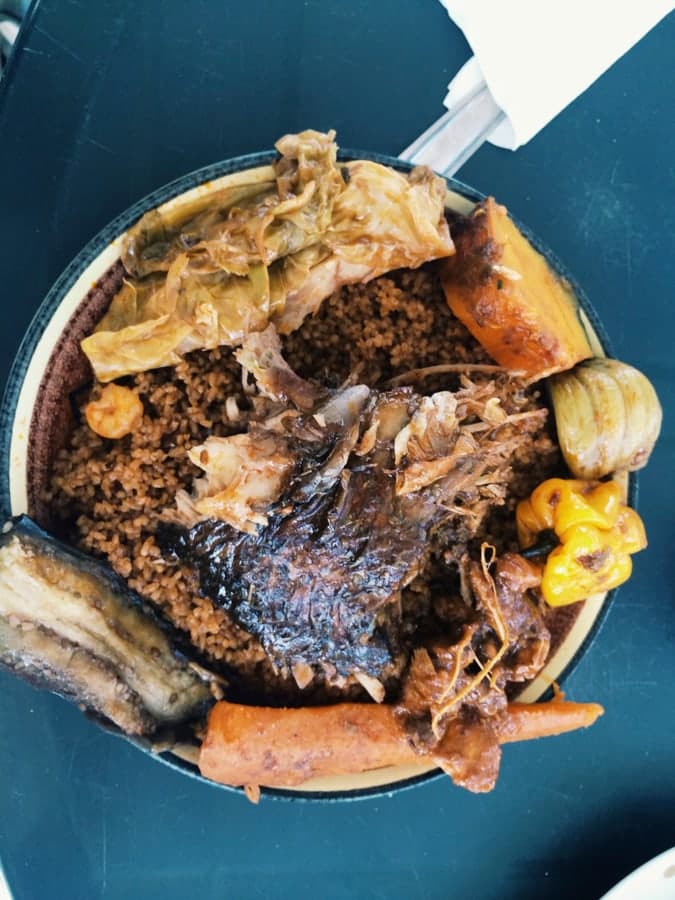
Thieboudienne, also called ceebu jën, combines fish, broken rice and vegetables. Associated with the fishing communities of Saint-Louis in Senegal, it has regional variations. Fresh fish may be joined by dried fish and dried molluscs; carrots, cabbage, cassava, aubergine and other seasonal vegetables cook in the broth. Tomato gives some preparations their red colour.[1][2]
One preparation stuffs the fish with parsley, garlic, onion and chilli before frying it. The fish and large vegetable pieces are then simmered in the seasoned liquid and lifted out while the rice cooks in the broth. The rice is arranged on a shared platter with the fish and vegetables placed over it.[2]
The preparation and ways of sharing ceebu jën form part of Senegalese culinary heritage. Knowledge has traditionally passed from mothers to daughters, and the meal has customs governing how diners sit, hold the bowl and eat together. UNESCO inscribed this culinary art on its Representative List of the Intangible Cultural Heritage of Humanity in 2021.[1]
References
Sources checked:
- Ceebu Jën, a culinary art of Senegal — Decision 16.COM 8.B.36 — UNESCO Intergovernmental Committee for the Safeguarding of the Intangible Cultural Heritage
- Le Vrai Tchep Dien Sénégalais — Recettes Africaines
image credit
Ceebu Jen, Senegalese dish.jpg
- creator:
- Alweaver2
- source:
- Wikimedia Commons
- license:
- CC BY-SA 4.0
- modified:
- Resized for Gochizu; no content edits.
audio credit
- voice:
- marin (gpt-4o-mini-tts)
- source:
- OpenAI API Text to Speech
- license:
- OpenAI API generated audio
- modified:
- AI-generated voice audio.